
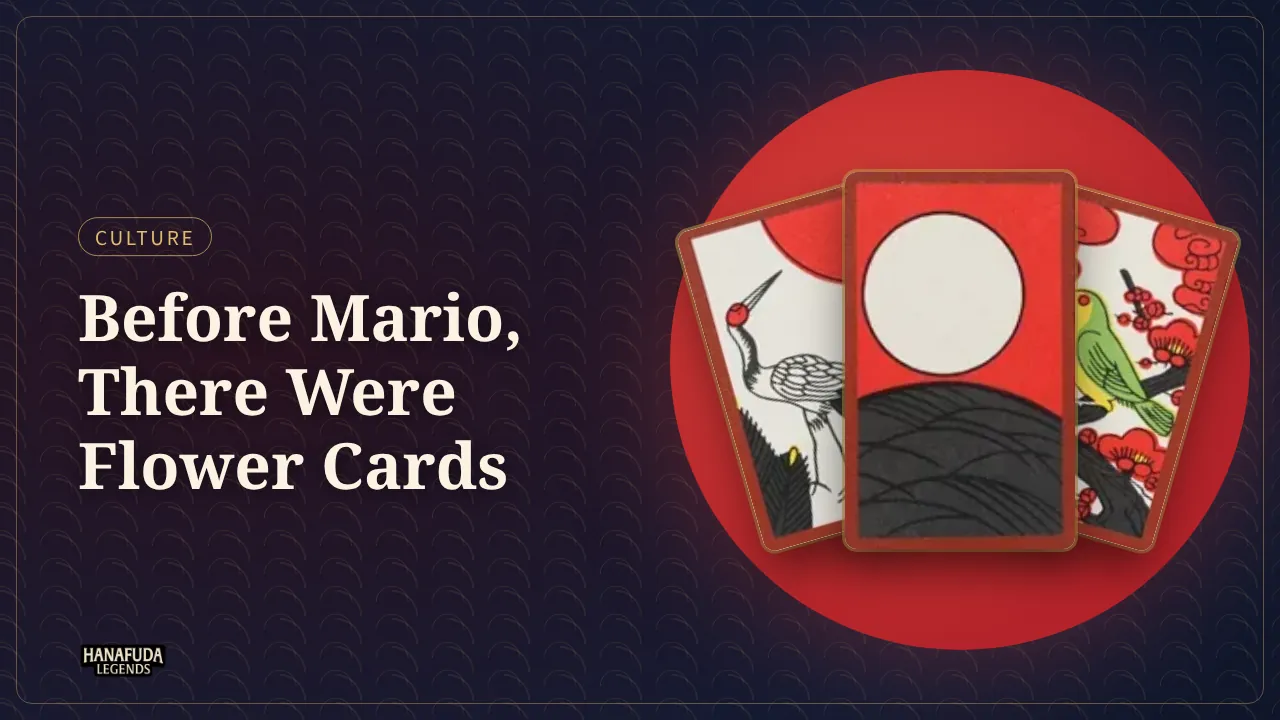
Prologue: Kyoto, 1889
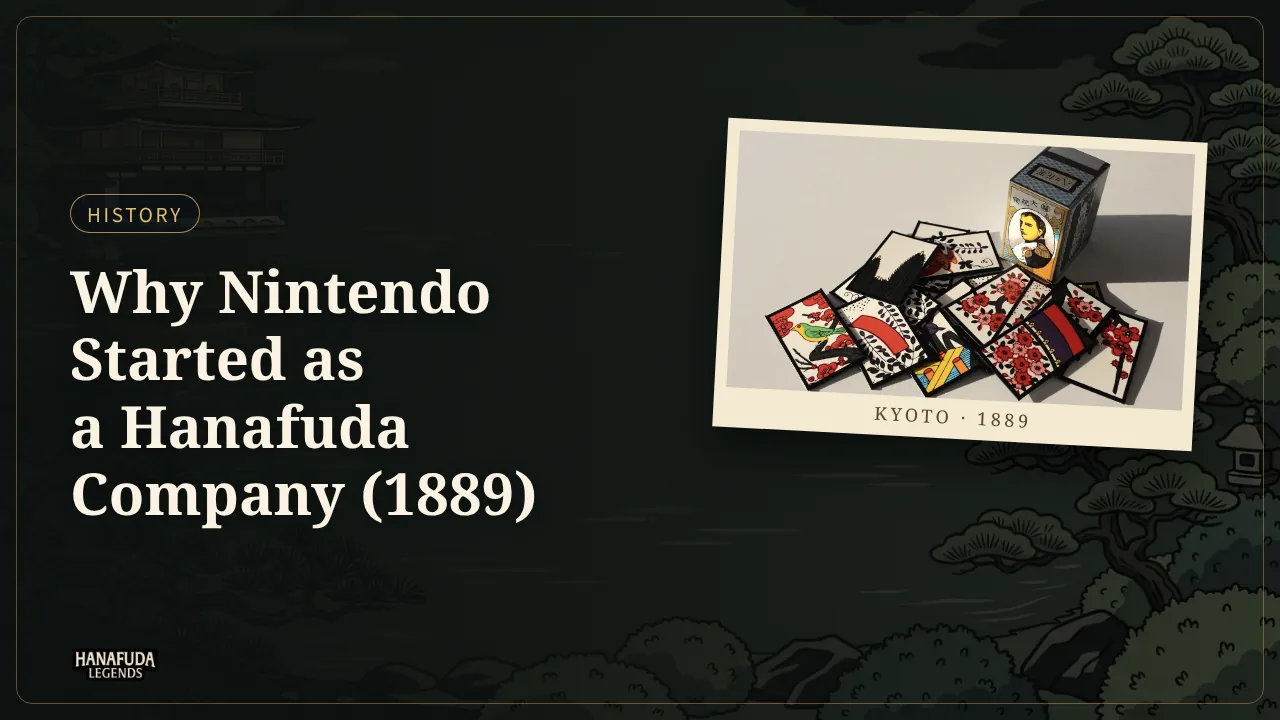
Kyoto, 1889.
A craftsman began making hanafuda in a small shop.
His name was Fusajiro Yamauchi. The shop was called Nintendo.
Who, at that moment, could have imagined that this shop would one day give the world Mario?
It began with 48 small flower cards.
137 years later, in Slovenia, a small country 9,000 kilometres from Kyoto, a man starts dealing those cards again.
That man is me.
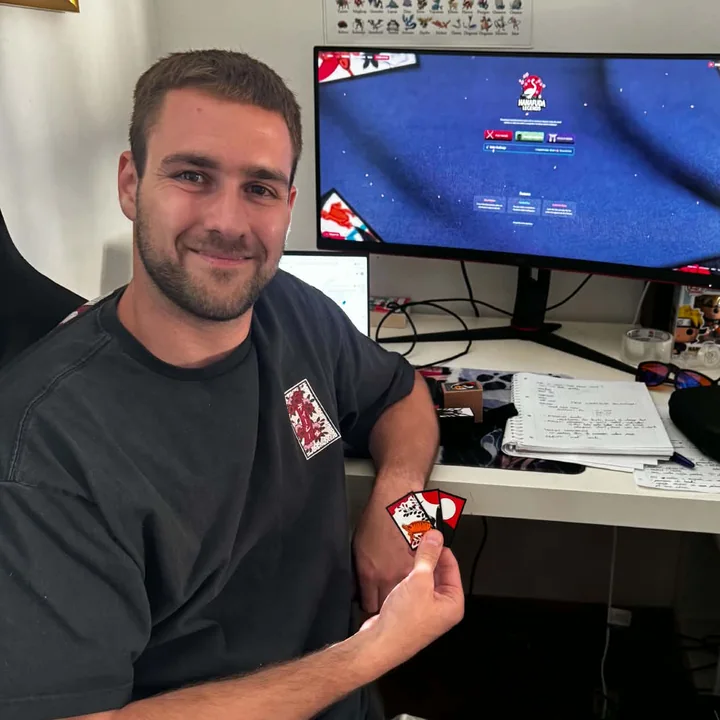
I’m Mark Batagelj, and on my own I make a free online hanafuda game called Hanafuda Legends. Today more than 6,000 people play it every month, and more than half of them are in Japan.
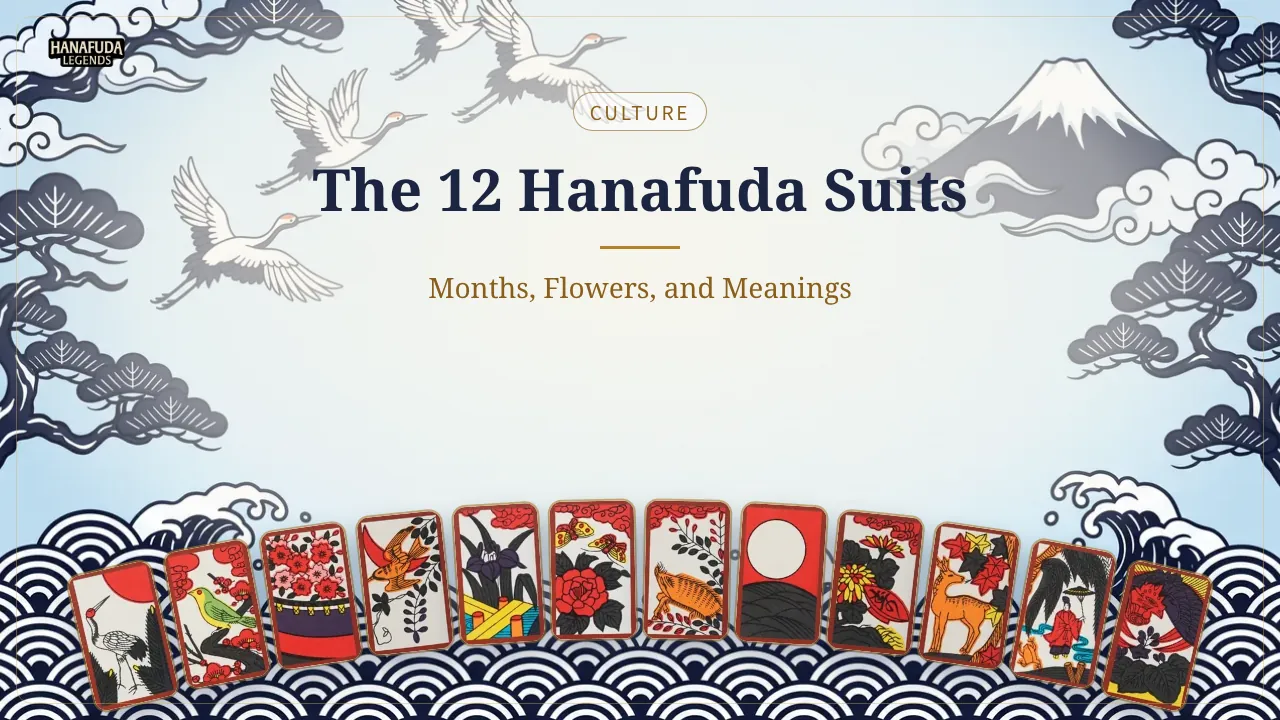
If you’ve never held hanafuda: it is a Japanese deck of 48 small, stiff cards, four for every month of the year, each painted with that month’s flower. The most popular game played with them is koi-koi, a two-player game of matching cards and building combinations called yaku.
This story is told through eight of those cards.
January: Pine and Crane. The first card
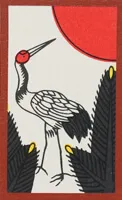
Pine and Crane is the first card of the year: the card of long life and new beginnings.
My beginning was a book.
In 2024 I was reading Around the World in Eighty Games, a book that travels through the games of the world.
At the hanafuda chapter, my hand stopped turning the pages.
Forty-eight cards, the flowers of twelve months. A crane on a pine. A curtain among cherry blossoms. Pampas grass under a full moon. Cards that Japanese players invented in an era when Western cards were banned. And Nintendo, of all companies, began with these cards.
Every card was a small painting, a season you could hold. When I closed the book, something had begun.
March: Cherry Blossom and Curtain. The curtain rises
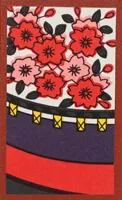
In 2025 I tried every online game I could find that let you play koi-koi.
They were heavy on a phone, or the screen was buried in ads, or the fun parts cost money. A game loved for so long, and nowhere to play it comfortably.
“Then I have no choice but to make it myself.”
The curtain rose. I made myself three promises:
- Everything that affects winning or losing will be free.
- No ads in the middle of a match.
- Never forget the respect owed to the cards and the people who make them.
August: Pampas Grass and Moon. Under the moon
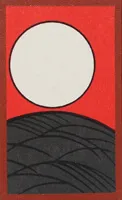
Pampas Grass and Moon is the card of autumn nights.
By day I worked my job as a programmer. In the evenings and at weekends I built hanafuda. Many nights I sat at the screen until the moon was high.
The card art, the scoring, online matches where two people far apart play at the same moment. All of it was far harder than I had imagined.
November: Willow and Ono no Michikaze. The frog jumps, again and again
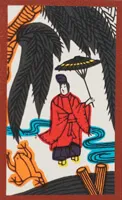
November’s rain card shows a man with an umbrella, and a single frog.
The Heian-era calligrapher Ono no Michikaze could not make his writing as good as he wanted, and he was close to giving up. Then, one rainy day, he saw a frog trying to jump onto a willow branch. It couldn’t reach. The frog jumped again, and again, and again. And at last it caught the branch.
Seeing this, the story goes, Michikaze picked up his brush once more.
I had my frog period too. The opponent’s card would flicker into two cards. A card you had captured slid back onto the table and vanished. I’d fix it, and it would come back.
Jump. Fall. Jump again.
In February 2026, I finally released the first version.
June: Peony and Butterflies. Butterflies from across the sea
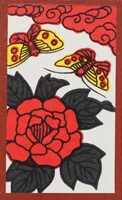
The first players came from hanafuda communities. Then, a little later, every time I looked at the numbers, there were more players from Japan, like butterflies drifting in from far away, one, then another.
I was happy. And honestly, I was scared.
Hanafuda is Japanese culture. If I had got something wrong, it would be disrespectful.
And I had got things wrong: yaku names, the way terms were used. Japanese players corrected me, again and again, always kindly. Each time, I fixed it. Many of the features in the game today began as messages people sent me on Discord.
This game wasn’t made by me alone. Together with players in Japan, it has come a little closer to the real thing, step by step.
February: Plum and Bush Warbler. The day the warbler sang
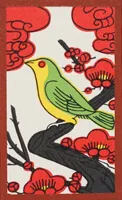
Plum and Bush Warbler is the card of the voice that announces spring.
In October 2026, a voice came to this game too. The Japanese musician Kokichi (NAE Project) composed its music and recorded the “Koi-koi!” and “Agari!” calls.
The first time I heard “Koi-koi!” in my own game, my heart was full. The cards on the screen felt as if they had started to breathe.
I added regional decks too: Echigo, Hanamaki, Yamagata, Awa. Card designs handed down in different parts of Japan, recreated, with their makers’ names on every deck.
December: Paulownia and Phoenix. The month the phoenix dances
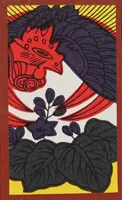
December’s card shows the legendary phoenix.
And this December, our first ranked season begins. Together with Hanafooda, a hanafuda maker in Hawaii, the top players will receive real hanafuda decks.

Cards born in Kyoto in 1889, played inside a game made in Slovenia, and decks made in Hawaii arriving in the hands of a player somewhere in the world.
Perhaps, in 137 years, the cards have travelled once around the world.
And January again: Pine and Crane
New Year is almost here. In Japan, I was told, hanafuda comes out whenever the family gathers for the holidays.
This year it’s fine even if some of the family can’t come home. Send one link and you sit at the same table, however far apart you are. No account needed. Someone who doesn’t know the rules can play after a few minutes of tutorial. For New Year I’ve also made a page with the rules, the yaku points table and printable guides.
The first card of the new year is Pine and Crane again.
To the craftspeople who have been making cards since before Nintendo was born, and to everyone in Japan who has kept playing all this time: because of you, someone living 9,000 kilometres away got to discover hanafuda.
Thank you, truly.
Now, let’s deal the cards. How about a game?
- Play Hanafuda Legends (free, no sign-up)
- Hanafuda for New Year: rules and yaku points
- Join us on Discord
This story was first published on Medium.
Hanafuda Legends is an independent game and is not affiliated with Nintendo.