
A standard Hanafuda deck has 48 cards divided into 12 suits — one for each month of the year. Each month is represented by a flower or plant, and each suit contains four cards of different ranks: a Bright or Animal (the high-value card), a Ribbon, and two Plain cards. The flowers aren't random — they reflect the Japanese seasons, and each one carries centuries of cultural meaning.
If you're learning Koi-Koi, recognizing the monthly suits is the first skill you need. Everything else — matching, capturing, building yaku — depends on knowing which cards belong together.
New to Koi-Koi? Try the interactive tutorial — or read the full rules in our How to Play guide.
1. Pine
2. Plum
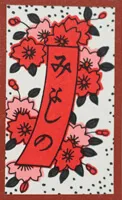
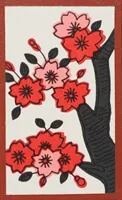
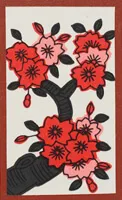
3. Cherry
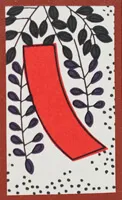
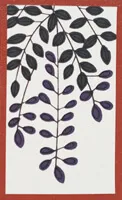
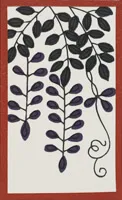
4. Wisteria
5. Kakitsubata
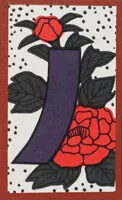
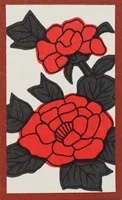
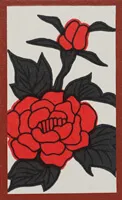
6. Peony
7. Clover
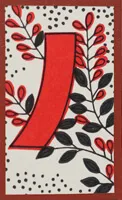
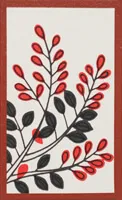
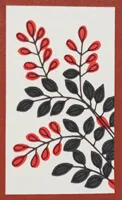
8. Grass
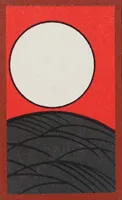



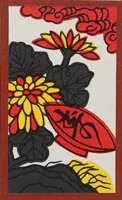
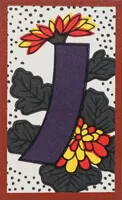
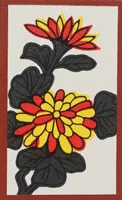
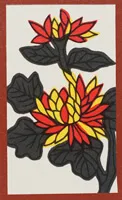
9. Chrysanthemum
10. Maple
11. Willow
12. Paulownia
January — Pine (松 / Matsu)
The year begins with pine — a symbol of longevity, resilience, and good fortune in Japan. Pine trees stay green through winter, which is why they represent endurance.
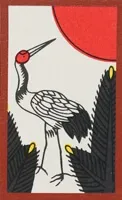
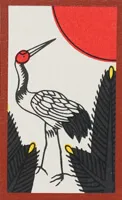
Bright: Crane and Sun. The most iconic card in the deck. A red-crowned crane stands under a rising sun with a pine tree. This card is part of the Five Brights and Three Brights yaku — the highest-scoring combinations in Koi-Koi.
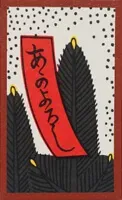
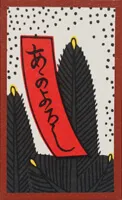
Ribbon: Red Poetry Ribbon. One of three poetry ribbons that form the Poetry Ribbons yaku (5 points). The writing reads "あかよろし" (akayoroshi) — roughly "red is good," signaling this is a valuable card.
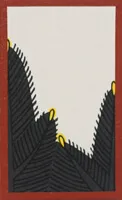
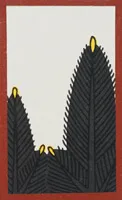
Plain cards (×2). Pine branches with sparse needles. Worth 1 point each as chaff.
Fun fact: Nintendo was founded in Kyoto in 1889 specifically to manufacture Hanafuda cards. The pine crane was one of the first cards Fusajiro Yamauchi's craftsmen hand-painted.
February — Plum Blossom (梅 / Ume)
Plum blossoms are the first flowers to bloom in late winter — often while snow is still on the ground. They symbolize perseverance and the arrival of spring.
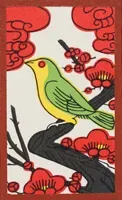
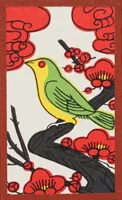
Animal: Bush Warbler (Uguisu). A small green bird perched on a plum branch. In Japanese poetry, the bush warbler's song is the definitive sound of early spring. This card contributes to the Animals yaku.
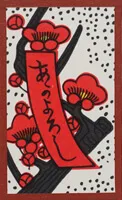
Ribbon: Red Poetry Ribbon. The second of the three poetry ribbons. Also reads "あかよろし." Together with January and March poetry ribbons, it forms Poetry Ribbons for 5 points.
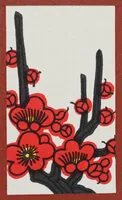
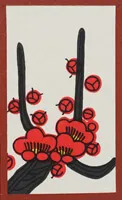
Plain cards (×2). Bare plum branches with delicate blossoms.
March — Cherry Blossom (桜 / Sakura)
Cherry blossoms are Japan's most celebrated flower. Hanami (花見) — cherry blossom viewing — is a national tradition, and the sakura season is tracked obsessively across the country every spring.
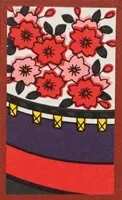
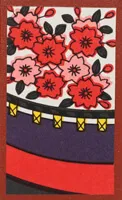
Bright: Cherry Blossom Curtain. A striped curtain (maku) hung among cherry trees — the kind used during outdoor hanami parties. This card appears in the Five Brights, Four Brights, and Three Brights yaku. It also pairs with the September Sake Cup to form Cherry Blossom Viewing (花見で一杯) — 5 points.
Ribbon: Red Poetry Ribbon. The third and final poetry ribbon, reading "みよしの" (Miyoshino) — the name of a famous cherry blossom viewing spot in Nara. Completes the Poetry Ribbons yaku.
Plain cards (×2). Falling cherry petals on pale branches.
April — Wisteria (藤 / Fuji)
Wisteria cascades in purple clusters from garden pergolas in April and May. The flowers signal the transition from spring to early summer.
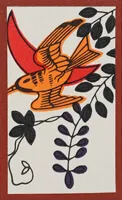
Animal: Cuckoo (Hototogisu). A small bird in flight against a red crescent moon — a classic composition from Japanese bird-and-flower paintings (花鳥画). The cuckoo calls at night, and in Japanese poetry, hearing its cry is associated with longing and the passage of time.
Ribbon: Purple Ribbon. A plain purple ribbon without writing. Does not count toward Poetry Ribbons; it can still contribute to generic Ribbon scoring.
Plain cards (×2). Drooping wisteria clusters.
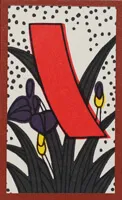
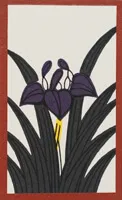
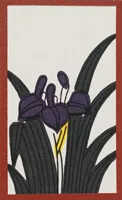
May — Kakitsubata (Water Iris) (杜若 / カキツバタ)
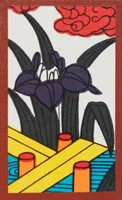
The May suit depicts Kakitsubata (杜若), the Japanese water iris — recognizable by the eight-plank bridge (yatsuhashi) beside it, an image drawn from the famous kakitsubata scene in the Tales of Ise (Ise Monogatari). It's often confused with ayame and shōbu (菖蒲, sweet flag), the plant tied to Boys' Day — but the card's flower is specifically kakitsubata, which is why modern references, including Nintendo, use that name.
Animal: Eight-Plank Bridge (Yatsuhashi). A wooden bridge over a kakitsubata pond — a reference to the famous scene from the 10th-century poem collection Ise Monogatari. This is one of the few Hanafuda cards that depicts a man-made structure rather than an animal.
Ribbon: Purple Ribbon. Another plain purple ribbon.
Plain cards (×2). Kakitsubata flowers growing beside water.
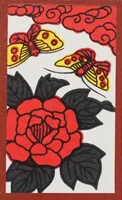
June — Peony (牡丹 / Botan)
The peony is originally a Chinese flower that became deeply embedded in Japanese art and gardens. It symbolizes wealth, good fortune, and prosperity. Its large, lush blooms attract butterflies — which is why this suit's animal card features one.
Animal: Butterfly. One of the three cards in Ino-shika-cho (Boar, Deer, Butterfly) — the most iconic yaku in Koi-Koi, worth 5 points. If you see a butterfly card, start thinking about whether you can chase this combination.
Ribbon: Blue Ribbon. One of three blue ribbons that form Blue Ribbons (青短) — 5 points. The blue ribbons are June (Peony), September (Chrysanthemum), and October (Maple).
Plain cards (×2). Full peony blooms.
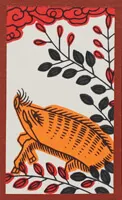
July — Bush Clover (萩 / Hagi)
Bush clover is a wild shrub that blooms from summer into autumn across Japan's mountains and fields. It's one of the "Seven Grasses of Autumn" in Japanese tradition.
Animal: Boar (Inoshishi). A wild boar charging through bush clover. Boars are said to sleep in clover thickets. This card is part of Ino-shika-cho — the Boar, Deer, Butterfly yaku. The name comes from the first syllable of each animal: 猪(ino) 鹿(shika) 蝶(cho).
Ribbon: Plain Ribbon. A red ribbon without writing. Does not count toward Poetry Ribbons.
Plain cards (×2). Bush clover branches with small flowers.
August — Pampas Grass (芒 / Susuki)
August is one of the most important months in the deck because it contains the Full Moon card. Pampas grass (susuki) sways in the autumn wind, and the full moon rises above it — a scene associated with Tsukimi (月見), Japan's moon-viewing tradition.
Bright: Full Moon. A golden full moon against a red sky over pampas grass. Part of the Five Brights, Four Brights, and Three Brights yaku. Paired with the September Sake Cup, it forms Moon Viewing (月見で一杯) — 5 points.
Historical note: Hanafuda months originally corresponded to the old Japanese lunar calendar, not the Gregorian one. The 8th month of the lunar calendar falls in September or October — which is actually when Tsukimi is celebrated.
Animal: Wild Geese (Kari). Three geese flying across the sky. Migrating geese are a classic autumn motif in Japanese art.
Plain cards (×2). Pampas grass in the wind. August is unusual in that it has no ribbon card.
September — Chrysanthemum (菊 / Kiku)
The chrysanthemum is the symbol of the Japanese Imperial family — the Imperial Seal is a 16-petal chrysanthemum. September's chrysanthemum festival (重陽の節句) celebrates longevity.
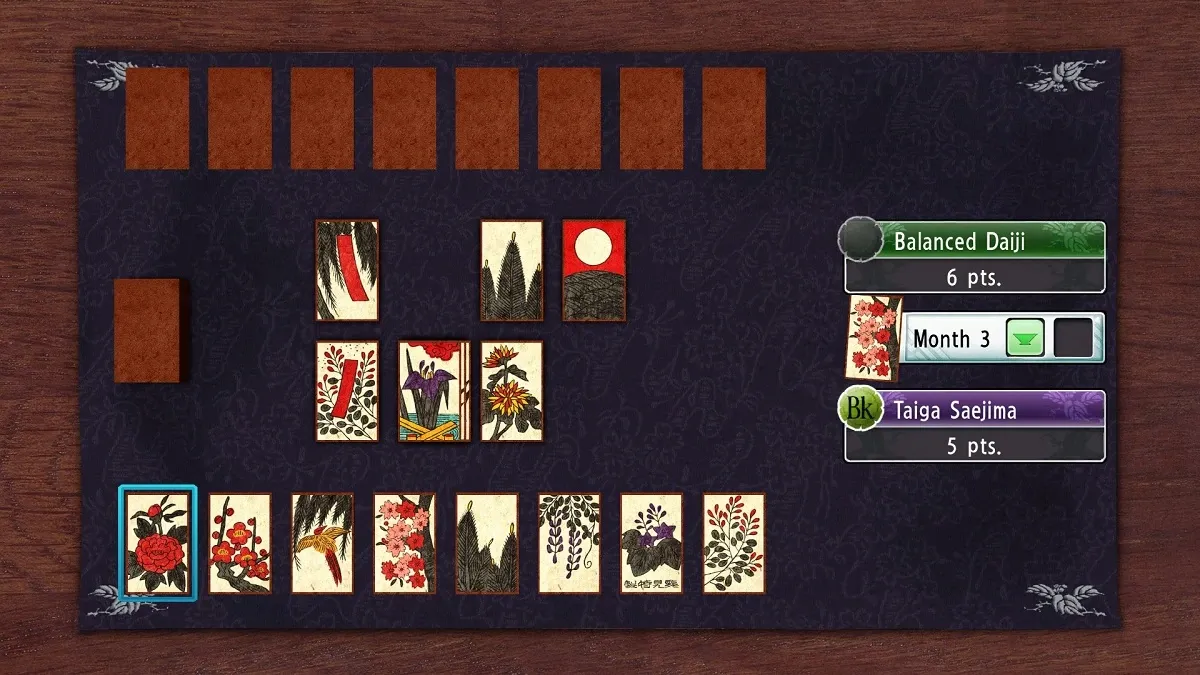
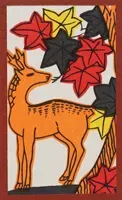
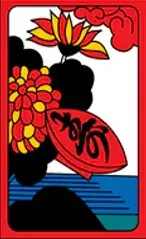
Animal: Sake Cup. A small cup with the character 寿 (kotobuki — "congratulations") written on it, resting among chrysanthemum flowers. This is the most versatile card in many rule sets — it pairs with both the Moon (August Bright) for Moon Viewing and the Curtain (March Bright) for Cherry Blossom Viewing. Some rules also count it as both an Animal and a Plain card.
Ribbon: Blue Ribbon. The second blue ribbon, contributing to Blue Ribbons.
Plain cards (×2). Chrysanthemum blooms.
October — Maple (紅葉 / Momiji)
Maple leaves turning red in autumn (紅葉狩り — momijigari, "maple hunting") is as culturally significant in Japan as cherry blossom viewing in spring. The vibrant reds and oranges of October are deeply tied to Japanese aesthetics.
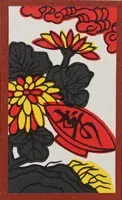
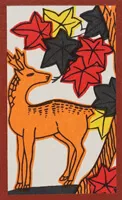
Animal: Deer. A deer standing under maple branches, looking back over its shoulder — a classic pose from Japanese art. The third card in Ino-shika-cho. The deer's backward glance is a famous visual motif.
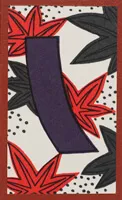
Ribbon: Blue Ribbon. The third and final blue ribbon. With June and September, it completes Blue Ribbons for 5 points.
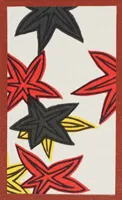
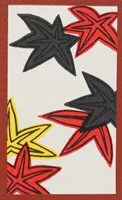
Plain cards (×2). Red and yellow maple leaves.
November — Willow (柳 / Yanagi)
November is the strangest month in the deck. While all other suits follow a consistent pattern, November has its own structure and contains some of the most unusual cards in Hanafuda.
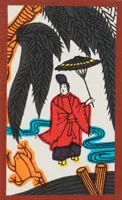
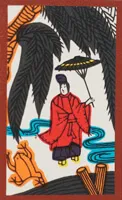
Bright: Rain Man (小野道風 / Ono no Michikaze). A man holding an umbrella in the rain beside a willow tree. This is the historical calligrapher Ono no Michikaze, who was supposedly inspired to persevere by watching a frog leap repeatedly at a willow branch. The "rain" association is why this card is sometimes excluded from Bright yaku — the Rainy Four Brights (7 points) is worth less than Four Brights without Rain (8 points).
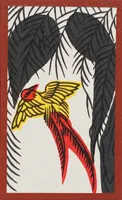
Animal: Swallow. A small bird flying through a thunderstorm — red sky, driving rain. Swallows are believed to fly low before storms.
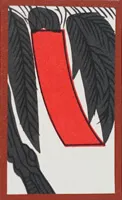
Ribbon: Plain Ribbon. A red ribbon. November's ribbon is sometimes excluded from Ribbon yaku in certain rule sets.
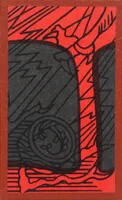
Plain: Lightning Storm. This is the only Plain card with a dramatic scene — red sky, black clouds, willow branches whipping in the wind. In some rule sets, this card acts as a wild card.
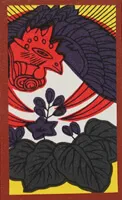
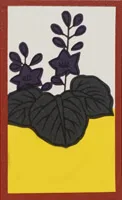
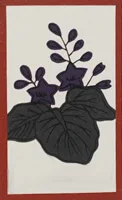
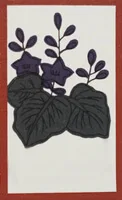
December — Paulownia (桐 / Kiri)
Paulownia is the tree of the Japanese government — the imperial crest of the Prime Minister's office features paulownia flowers. It's fast-growing and was traditionally planted when a daughter was born, then harvested to make furniture for her wedding.
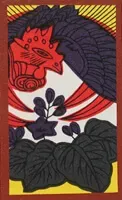
Bright: Chinese Phoenix (鳳凰 / Hōō). A mythical phoenix perched on a paulownia tree. The phoenix and paulownia together are a symbol of imperial authority. This card completes the Five Brights — the highest-scoring yaku in Koi-Koi (10–15 points depending on rules).
Plain cards (×3). December is unique — it has three Plain cards and no Ribbon or Animal. One of the three plains has a yellow/gold background and sometimes shows the manufacturer's brand name. In some rule sets, this yellow plain counts as an extra card for specific yaku.
How the Suits Connect to Koi-Koi Strategy
Knowing the flowers isn't just trivia — it directly affects how you play. When you see a cherry blossom card on the field, you instantly know: "that's March. If I have any other March card, I can capture it." When your opponent captures the Crane (January Bright), you know they might be building toward Five Brights or Three Brights — and you should consider blocking them by capturing the other Bright cards yourself.
The yaku system is built on these monthly suits. Ino-shika-cho requires cards from three different months (June, July, October). Poetry Ribbons requires ribbons from the first three months (January, February, March). Understanding which months belong to which yaku is what separates beginners from intermediate players.
Want to test your knowledge? Play a game against the AI or try the interactive tutorial. See all 12 months in our deck gallery — with 15 different regional art styles from across Japan.