If you are a Western gamer or anime fan, chances are you've encountered Hanafuda without even realizing it. Maybe you were trying to 100% complete a Yakuza game, or maybe you were on the edge of your seat during the climax of a sci-fi anime.
Hanafuda (which translates to "flower cards") is a traditional Japanese card game with stunning artwork and deep strategy. While there are many ways to play with a Hanafuda deck, the most popular game is Koi-Koi, a fast-paced, two-player matching game. If you've been wondering how to play, or just want to know where you've seen these beautiful cards before, here is the pop-culture history of Hanafuda.
The Yakuza / Like a Dragon Connection
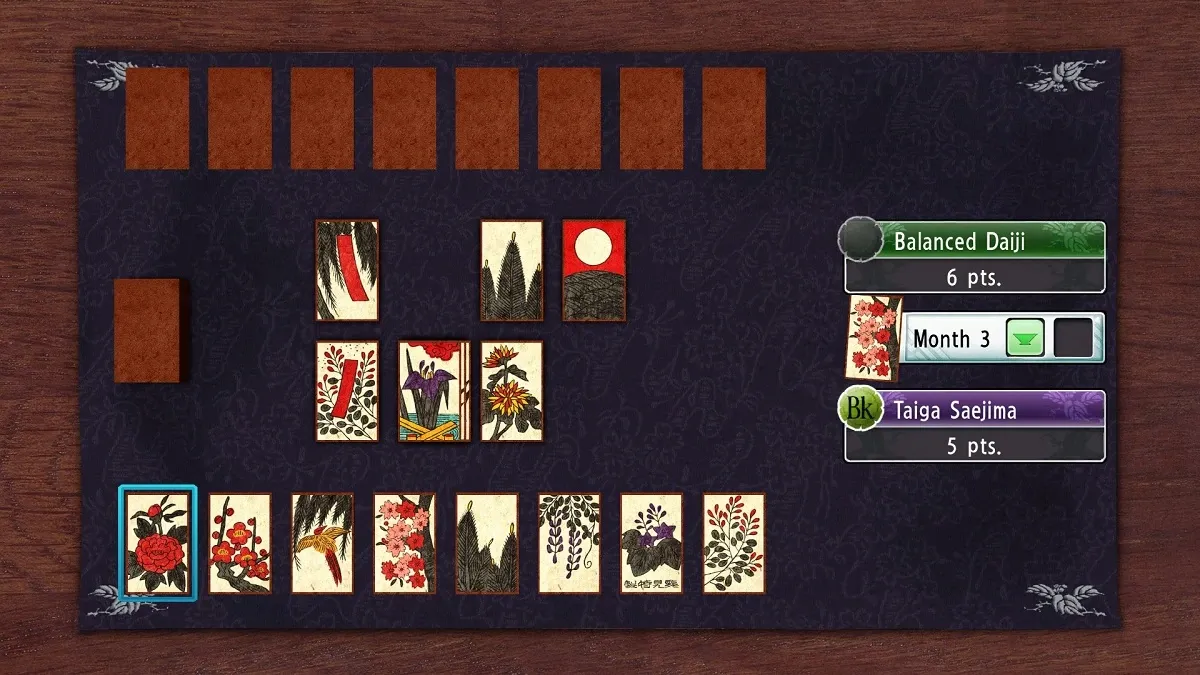
For many gamers, their first exposure to Hanafuda is the notoriously challenging minigame found in Sega's Yakuza (now Like a Dragon) series. Whether you are wandering around Kamurocho or Sotenbori, stepping into a gambling hall means you are going to have to play Koi-Koi.
For completionists trying to earn their platinum trophies or unlock specific items, beating the in-game AI can feel like hitting a brick wall. The game doesn't pull any punches, and learning the combinations (called Yaku) while losing your virtual Yen is stressful.
The Solution: The absolute best way to practice for the Yakuza minigames is to play a Hanafuda online game where the stakes are zero. You can jump into Hanafuda Legends to play free matches against an AI, learn the card sets at your own pace, and then return to Kamurocho to clear out the gambling hall.
The Summer Wars Anime

If you have seen Mamoru Hosoda's gorgeous 2009 anime film Summer Wars, you already know how intense Koi-Koi can be. Without spoiling the entire movie, the climax revolves around a massive, high-stakes game of Hanafuda played inside a global virtual reality network called OZ.
The main characters literally wager their digital avatars in a game of Koi-Koi to stop a rogue AI from destroying the world. When the protagonist slams down a card and yells "Koi-Koi!" (which essentially means "Come on!" or "Let's keep going!"), it is one of the most hype moments in anime history. Playing the game yourself lets you finally understand exactly what winning hand they were trying to build.
Nintendo's Secret Origins

Long before Mario, Zelda, or the Switch existed, Nintendo was a playing card company. Founded in Kyoto in 1889 by Fusajiro Yamauchi, Nintendo's original purpose was to manufacture and sell premium, hand-crafted Hanafuda cards.
To this day, Nintendo still prints physical Hanafuda decks to honor their roots. When you play a game of Koi-Koi, you are interacting with the very foundation of the world's most famous video game company.
How to Play Hanafuda (The Basics)
Unlike Western playing cards that use numbers and suits, a Hanafuda deck consists of 48 cards divided into 12 "months" (or seasons). You match and capture cards by month, collecting specific sets (like the Ino-shika-cho or Five Brights) to score points.
When you form a winning hand, you have to make a choice: take your points and end the round, or call "Koi-Koi" to keep playing and risk it all for an even bigger score!
Want to learn the complete rules? Check out our Comprehensive How to Play Guide.
Ready to try it yourself?
Play our interactive 5-minute tutorial, or jump straight into a free game online.
Hanafuda Legends is not affiliated with, endorsed by, or connected to Sega, Nintendo, or any other third-party rights holders. Yakuza / Like a Dragon is a registered trademark of Sega. Summer Wars is a film by Mamoru Hosoda. Nintendo and related trademarks are the property of Nintendo Co., Ltd. All trademarks and copyrighted material are the property of their respective owners and are referenced here for commentary and educational purposes only.