 🌸
Hanafuda Legends
Koi-Koi Online
Sankō is three Bright cards without the Rain Man. It is worth 5 points, and it's the most common Bright yaku.
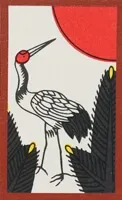
January · Crane on Pine
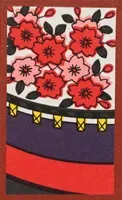
March · Cherry Blossom Curtain
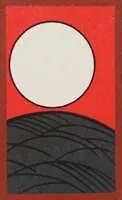
August · Full Moon
Any three of: Crane and Sun (January), Curtain (March), Moon (August), Phoenix (December).
Sankō upgrades to Shikō (8) with a fourth non-Rain Bright, to Ame-Shikō (7) with the Rain Man, and to Gokō (10) with all five. You score only the highest Bright yaku.
Brights are worth chasing whenever they appear: they lead to big hands, and capturing them also denies your opponent. Early in the round, prioritise a field Bright over a chaff capture when you have the choice.
Sankō is a natural point to stop: 5 points is a solid round. Call Koi-Koi only if a fourth Bright looks reachable and your opponent isn't close to a yaku of their own.
Sankō is the Bright yaku you will see most often. Treat any Bright on the field as high priority: capturing it denies your opponent and moves you toward 5 points. Once you have Sankō, glance at your opponent's pile before calling Koi-Koi — ribbons and animals can finish in a single turn. Remember that the Rain Man never counts toward these three; if your third Bright is the willow card, you do not yet have Sankō.
Sankō uses the same Nintendo-style Koi-Koi scoring on Hanafuda Legends whether you play ranked, casual, private rooms, or vs computer. Set yaku replace smaller versions of the same family (you do not score Sankō and Shikō together), while unrelated yaku such as ribbons, animals and chaff still add to your total when you stop.
If you are new to the combination, practise in the tutorial or against the computer first, then take it into online play. How to Play covers the turn structure, matching, and when to call Koi-Koi versus stopping for points.