 🌸
Hanafuda Legends
Koi-Koi Online
Tsukimi-zake, “sake under the moon”, combines the Moon (August Bright) and the Sake Cup (September). It is worth 5 points.

August · Full Moon
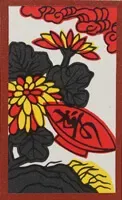
September · Sake Cup
Like Hanami-zake, it's a two-card yaku that adds to your other yaku. With the Sake Cup, the Moon and the Curtain together, you score both viewing yaku: 10 points from just three cards.
August is a month of high-value cards: the Moon, the Geese (an animal) and two chaff. If the Moon is on the field and you hold an August card, the capture is valuable on its own and sets up Tsukimi-zake and the Bright yaku at the same time.
If your opponent has captured the Moon, keep an eye on September. Capturing the Sake Cup first blocks Tsukimi-zake completely.
Viewing yaku are always scored in this game. The Sake Cup counts as an animal toward Animals; it does not also count as chaff for Kasu.
August packs the Moon, the Geese and two chaff into one suit. Holding multiple August cards lets you choose: take the Moon for Brights and Tsukimi-zake, or take Geese toward Animals. Your opponent faces the same choice, so August captures often decide whether a viewing yaku is still possible.
Tsukimi-zake uses the same Nintendo-style Koi-Koi scoring on Hanafuda Legends whether you play ranked, casual, private rooms, or vs computer. Set yaku replace smaller versions of the same family (you do not score Sankō and Shikō together), while unrelated yaku such as ribbons, animals and chaff still add to your total when you stop.
If you are new to the combination, practise in the tutorial or against the computer first, then take it into online play. How to Play covers the turn structure, matching, and when to call Koi-Koi versus stopping for points.