

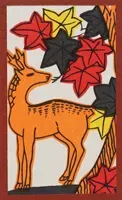
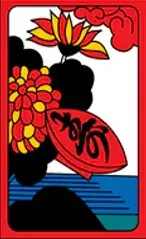
Koi-Koi and Go-Stop are both card-matching games played with flower cards, but they are not the same game. Koi-Koi is a two-player Japanese game using Hanafuda cards. Go-Stop is a Korean game for two to six players using plastic Hwatu cards. They share a core mechanic — match cards by month, form scoring combinations, decide to stop or keep going — but the rules, complexity, and culture around them are quite different.
New to Koi-Koi? Start with the interactive tutorial — or jump straight into a game.
What They Share
Both games use 48 cards in 12 monthly suits, each represented by a flower. Both are "fishing" games: match cards by month from the field, capture pairs, form yaku (scoring combinations). And both are named after their defining mechanic — calling "koi-koi" (come on!) or "go" to keep playing for more points, risking everything if your opponent scores first.
Which came first is genuinely debated. Some researchers say Koi-Koi simplified Go-Stop; Korean scholars generally argue the reverse. Most likely both evolved from older games like Hana-Awase and Hachi-Hachi and diverged independently.
Quick Comparison
The Decks: Hanafuda vs Hwatu
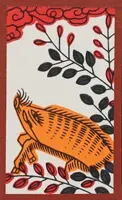
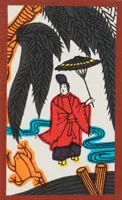
 January — Pine
 January — Pine
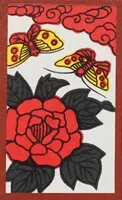
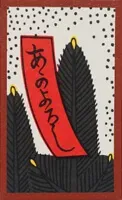
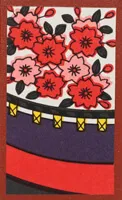 March — Cherry
 March — Cherry
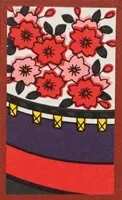
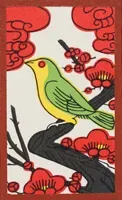
 August — Full Moon
 August — Full Moon
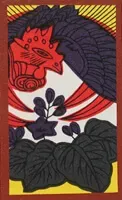
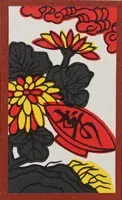
 November — Swallow
 November — Swallow
Both decks contain the same 12 monthly suits with four cards each — the structure is identical. But the physical cards are different. Hanafuda cards are paper or cardboard with muted, traditional artwork. Nintendo was originally a Hanafuda manufacturer, founded in Kyoto in 1889. Hwatu cards are thick plastic with textured backs, designed for fast play — Go-Stop is loud, with players slapping cards on hard surfaces.
The key difference: Hwatu decks include bonus joker cards used in Go-Stop that don't exist in the standard 48-card Hanafuda deck. If you're curious about the variety of Hanafuda designs across Japanese regions, check out our deck gallery.
Hanafuda was introduced to Korea during the Japanese colonial period (1910–1945). After independence, Koreans developed their own games, artwork, and manufacturing traditions around the cards. Hwatu became a distinctly Korean product — the word means "flower fight" (花鬪), compared to Hanafuda's "flower cards" (花札).
Key Gameplay Differences
Player count changes everything. Koi-Koi is strictly two players — intimate, strategic, fast. You always know what your single opponent is collecting. Go-Stop supports up to six, with three being the most common. Adding players means tracking multiple opponents, shifting alliances, and far less predictability.
Go-Stop has "shaking." If you're dealt three cards of the same month, you can reveal them to all players (흔들기 / heundeulgi). This guarantees captures but leaks information. Koi-Koi has no equivalent — your hand is always private.
Stopping requires a minimum score in Go-Stop. In Koi-Koi, any completed yaku lets you end the round — even 1 point. Go-Stop typically requires 3 points (three players) or 7 points (two players) before you can call "Stop." This forces riskier play.
Go-Stop multipliers stack aggressively. Koi-Koi has two multipliers: 7+ points doubles your score, and your opponent having called koi-koi doubles it again (maximum 4×). Go-Stop has five or more multiplier types — 피박 (pi-bak), 광박 (gwang-bak), successive go bonuses — that can stack to 8× or higher in a single round.
Drawn rounds hit harder in Go-Stop. When no one scores, Go-Stop declares Nagari (나가리): the round is void and the next round's loser pays double. This creates cascading pressure — Nagari makes the next round worth more, which makes players more aggressive, which makes another Nagari more likely.
Cultural Context
Koi-Koi is nostalgic rather than mainstream in modern Japan. Most Japanese people recognize Hanafuda but few play regularly. Its visibility comes from pop culture: the anime film Summer Wars, the Yakuza / Like a Dragon video game series, and its general association with traditional Japanese aesthetics. We wrote more about this in Hanafuda in Pop Culture: From Yakuza to Summer Wars.
Go-Stop is a genuine national pastime in Korea. It's played at Lunar New Year and Chuseok family gatherings. Hwatu decks are sold at every convenience store. Go-Stop appears in Korean TV dramas so frequently that non-Korean viewers sometimes think it's a fictional game. The gambling side is more active and more regulated — online Go-Stop venues have been involved in illegal gambling cases in South Korea.
Which Should You Learn First?
New to flower cards? Start with Koi-Koi. Simpler rules, two players, easier to memorize the yaku. Once the monthly suits feel natural, Go-Stop's extra mechanics will click much faster.
Korean or playing with Korean family? Go straight to Go-Stop. Learning in context with experienced players beats studying rules alone.
Want maximum strategic depth? Learn Koi-Koi as your foundation, then graduate to Go-Stop for the multiplayer dynamics and stacking multipliers.
Want to play right now? Try our interactive Koi-Koi tutorial — it walks you through your first game step by step, right in your browser. No download, no signup. Or if you already know the basics, jump straight into a match.
Other Hanafuda Games
Koi-Koi and Go-Stop are the most popular, but not the only flower-card games. Hachi-Hachi is the expert-level Japanese game for 2–7 players. Sakura is the Hawaiian variant, still played in island communities today. Mushi is a simplified two-player game that removes two suits entirely — good for absolute beginners. For full Koi-Koi rules and all 12 yaku, see our How to Play guide, or learn by doing with the interactive tutorial.