Korean Hwatu
Traditional
Deck description
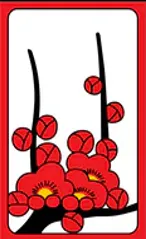
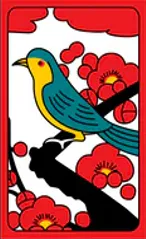
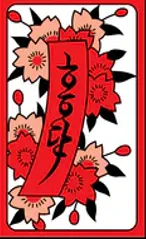
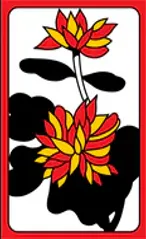
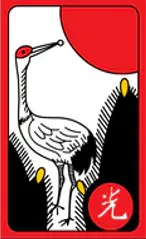
The design of Korean hwatu was adapted from special "Hachi-hachi-bana" decks manufactured by Oishi Tengudo and Nihon Karuta Seizo, which include a circled "hikari" mark on each Bright card. Both the "akatan" and "aotan" Ribbon cards were marked with Korean writing: "hongdan" for the red ribbons and "cheongdan" for the blue ribbons. Hidden Lore Swapped months: In Korea, the Paulownia suit corresponds to November, while the Willow suit corresponds to December. Different interpretations of the suits: The April, May, and August cards were represented by the Wisteria, Kakitsubata, and Pampas Grass, respectively. However, in Korea, they were interpreted as Black Bush Clover, Orchid, and Desert Mountain, respectively. Logo on the Full Moon: The practice of putting a manufacturer's trademark on the Full Moon card evolved from Nihon Karuta Seizo's practice of putting an image of a rabbit pounding mochi on the Full Moon card.
From this deck